

Product Details
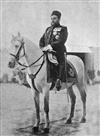
MADE FOR HIS MAJESTY HABIBULLAH KHAN, 15TH AMIR OF AFGHANISTAN
HOLLAND & HOLLAND
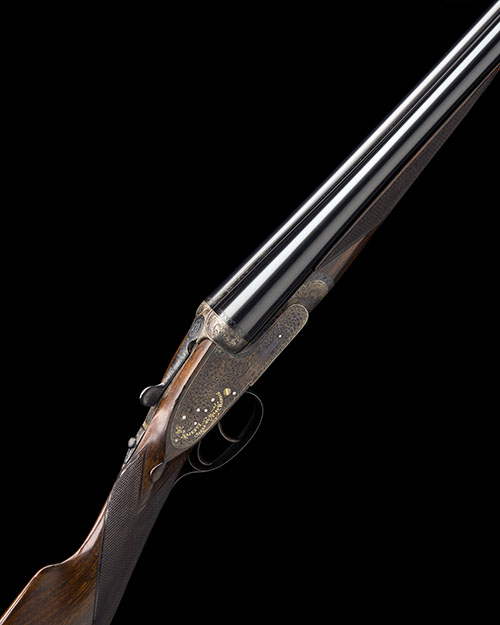
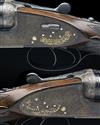
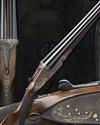
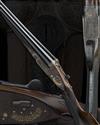
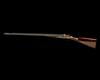
A 20-BORE 'ROYAL' HAND-DETACHABLE SIDELOCK EJECTOR, serial no. 27213,
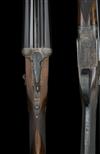
30in. sleeved nitro barrels (in 2014), rib engraved 'HOLLAND & HOLLAND. 98. NEW BOND STREET. LONDON.', 2 3/4in. chambers, bored approx. 1/2 choke in both, treble-grip action with hidden third bite, carved foliate fences, toplever engraved 'HOLLAND'S PATENT', automatic safety with gold-inlaid 'SAFE' detail, hand-detachable lockplates, gold-inlaid cocking-indicators, fine bold foliate scroll engraving, the left lockplate gold-inlaid in Ta'liq script, the right with a cartouche ornately gold lettered 'HIS MAJESTY SIRAJ-UL-MILAT WADDIN', the underside with an elaborate cartouche inscribed 'ROYAL HAMMERLESS EJECTOR', retaining virtually full renewed colour-hardening and finish, 14 1/2in. very highly-figured stock including horn buttplate, weight 6lb. 1oz.
Provenance: The makers have kindly confirmed that the gun was completed in 1913 for 'Balemau' as a '16 bore Royal Hss Ejector, 28in. steel barrels, new system treble grip, detachable locks, characters in gold on lockplates'
Further research on this gun, kindly supplied to us by Dr John Farrimond reveals that the gun was one of five ordered in 1913 for the Amir. The other guns ordered were a 16-bore Holland Royal De Luxe sidelock ejector, a Royal Paradox, a Royal .375 double rifle and a .375 bolt rifle.
The script 'HIS MAJESTY SIRAJ-UL-MILAT WADDIN' refers to an honorific title bestowed upon the Amir by the Sultan of Constantinople, which translates as 'The Light of the Nation and the Faith'
Habibullah Khan (1872 - 1919) was the Emir of Afghanistan from 1901 until his assassination in on a hunting trip 1919.
Eldest son of Abdul Rahman Khan whilst a strong ruler like his Father, had more of an eye on modernisation and reform with an overriding desire to unify Afghanistan as fully independent under an absolute central Government.
He worked hard to this end, improving relations with the tribal chiefs and the religious establishment and instituting numerous reforms to modernise and improve administration and the military. Under his direction, he divided Afghanistan into six provinces-Kabul, Qandahar, Herat, Farah, Afghan Turkestan and Badakhshan-which were then divided into districts. A program of road building and improved communications with improvements to the postal system was initiated and a telephone system was introduced in 1908. He helped found the Afghan Motor Transport Company, keen to promote his new roads and their value in terms of travel and industry. He was also responsible for the country's first state hospital and first public orphanage.
He also disbanded the much hated and feared internal intelligence organization and repealed many of the harshest criminal penalties (some of which were very harsh indeed - for an interesting insight into life in Afghanistan under his father's regime, see "Under the Absolute Amir" by Frank A. Martin)
He introduced modern weapons to the military and founded Afghanistan's first Royal Military College to train an Officer's Corps in 1904 and in the same year laid the foundations for a modern education system by opening the first secondary school with a wide ranging curriculum, covering subjects from English, Turkish and Urdu languages to mathematics, history, geography, art and even public health. The country's first public library was established at the school.
Please click HERE to view Terms & Conditions.
Estimate £12,000-16,000
S2