

Product Details
THE OLYMPIC GOLD MEDAL WINNING GUN BELONGING TO JOHN ROBERT 'BOB' BRAITHWAITE
FABRIQUE NATIONALE
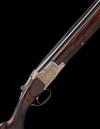
A 12-BORE 'C3' SINGLE-TRIGGER OVER AND UNDER EJECTOR, serial no. 24382 S4,
29 7/8in. nitro barrels with 8mm ventilated matt top-rib (missing intermediate bead sight), 2 3/4in. chambers bored approx. 3/4 choke in both (under barrel with choke insert), hold-open toplever, manual safety with integral barrel selector switch and gold-inlaid 'O', 'U' and 'S' details, fine acanthus scroll engraving with beaded borders, the right side later gold-inlaid with the Olympic Rings, bright finish, 14 3/8in. figured semi-pistolgrip stock including 1in. rubber recoil pad, weight 7lb. 3oz., in a canvas case.
To view a recent video of Bob talking about his life and in particular the 1968 Gold medal winning performance please click HERE. Movie by kind permission © Drew Gardner.
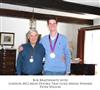
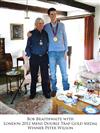
The Braithwaite guns were demonstrated for Holt's by Olympic gold medallists Richard Faulds and Peter Wilson at Owls Lodge Shooting School, please click on the following link to access a slide show of images:

Provenance: Bob Braithwaite -
by Vic Harker
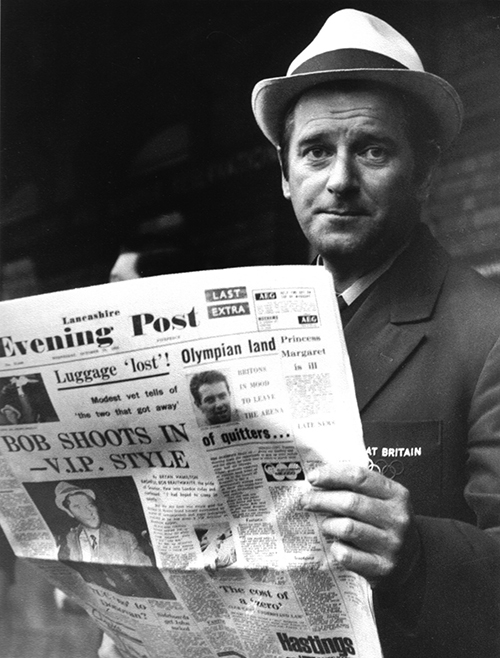
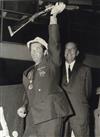
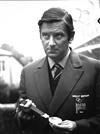
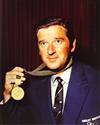
At the Mexico Olympic Games in 1968 John Robert (Bob) Braithwaite won the gold medal for the Olympic Trap event. It was the first Great Britain had won for clay target shooting which had been introduced into the Olympic Games in 1952 at Helsinki. Olympic Trap is a particularly demanding game designed to test the very best shooters to their limits. The sport requires, apart from the ability to shoot a shotgun very accurately, lightning reflexes, a cool head and as it was in '68 over 200 targets in two days, considerable physical and mental stamina. At that time Braithwaite was 43 years old. Born into a farming family shooting was a way of life to the extent Bob later recalled that he could not remember when he did not have some kind of gun in his hands. Academically precocious, aged 16 his shooting days were over for a while when he was accepted by the Royal School of Veterinary Surgeons at the University of Edinburgh, where he also went on to study for a Bsc degree. Gaining his degree in 1947 and invited by Guelph University in Canada to further his studies, he instead joined the practice of the vet who had encouraged him to become an animal doctor.
By his early 30s established in his profession, Braithwaite's interest in shooting was extended to driven pheasants. He bought a Holland & Holland gun and soon gained a reputation as an outstanding game shot. His enthusiasm eventually palled however and instead he found a kind of shooting in the form of Olympic Trap that would tax even his skills. At that time in the UK facilities were minimal with only three ranges in the country at which to compete, but the challenge Olympic Trap represented retained Braithwaite's interest, even passion. In 1964 he was selected together with shooting legend Joe Wheater to represent Great Britain at the Olympic Games in Tokyo. Finishing in seventh position with 192x200 it was a creditable first attempt, but it did not satisfy Braithwaite's ambitions and he would be back.
Between 1964 and the next Olympics Braithwaite dominated his chosen sport, winning the already prestigious British Grand Prix four years in succession. Regular practice was a problem with still the same small number of shooting grounds having facilities for Olympic Trap. In part at least Braithwaite solved the problem by installing a single oscillating trap on a piece of the family farm called Rough Lot. The trap wound up to the maximum it threw targets well beyond the maximum required distance of 80metres. With the help of the local Priest who assisted as trap operator, Braithwaite practiced twice a week. Meantime he had purchased a new gun, a Browning C3 Grade with 30" light barrels. Weighing little more than 7 1/4lbs, while most Brownings at this time were more than 1/2lb heavier, it was not that Braithwaite required a light gun, but for Olympic Trap he believed speed was of the essence. 'See it and shoot it' was his mantra and holding the C3s barrels lightly in his left hand he could swing them onto the line of the target in an instant.
Qualifying for the Mexico Olympics with his teammate and friend Eric Grantham, a Yorkshire farmer, in his first round of the Olympic Trap competition he missed two targets, not an auspicious start. On hand to point this out was the then British Minister for Sport, Dennis Howells; Braithwaite acknowledged it was not 'but I won't miss any more' he added. From anybody else this might have been taken for nothing more than bravado and perhaps Howells did, but he would have misjudged this steely Lancashire vet. A passionate desire to win can sometimes boil over and lead to more mistakes, most particularly in a sport like Trap shooting, but throughout the rest of the first day and the next Bob Braithwaite summoned all the powers of a truly exceptional competitor and resolutely maintained his grip on the contest. At the end of the first day he was tied with America's Tom Garrigus, a member of the US Air Force Shooting Team, Kurt Czekalla of the GDR and Pavel Senichev USSR all with 98 x 100.
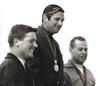
It's very hard to beat a man who doesn't miss and on the second day Braithwaite didn't. Many years later he recalled to me his emotions over the last nail-biting 25 targets. "I had completely forgotten where I was, I was just loading and shooting and when I broke the last target I had to be reminded not to load again as the contest was over". On the winner's podium the gold medal was placed round Braithwaite's neck, silver went to Tom Garrigus after a shoot-off with Kurt Czekalla both of whom had scored 196.
There had been only three gold medals won by the GB Team in the '68 Games and Braithwaite was offered the honour of carrying the flag in the closing parade, but this busy Veterinary Surgeon returned home immediately to his practice in Garstang, Lancashire.
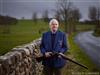
Bob Braithwaite loved shooting and was fascinated by the challenge Olympic Trap provided, but none of this defines the man. The large crowd that attended his funeral in March 2015 were in the main people who had known the Vet whose knowledge and skill healed their animals great and small. As a public servant he served as the Lancashire Constabulary's Veterinary Surgeon for many years and in the 1960's during the Cold War was given responsibility by the Ministry of Agriculture that in the event of a nuclear incident he would supervise animal care between Carlisle and Preston. This included advising the Police and Army should farm animal security be threatened.
On the shooting range at the height of his powers Braithwaite gave nothing away to his rivals, though for years after his triumph in Mexico he would be approached by shooters for advice, believing he possessed some special secret as it related to Olympic Trap shooting. He couldn't oblige them because he didn't have one. "See it and shoot it" was always his response. He maintained his battle was only with the clay target and during a competition what other shooters did was of no concern to him.
A complex and multi-faceted man certainly, which made his achievements in the most demanding form of clay target shooting all the more remarkable.
Other Notes: We are kindly informed by Mrs Braithwaite that the missing bead sight was found to be unnecessary and deliberately removed by Bob Braithwaite himself
Please click HERE to view Terms & Conditions.
Estimate £7,000-9,000
S2