

Product Details
FORMER PROPERTY OF SIR ROGER PALMER BART.
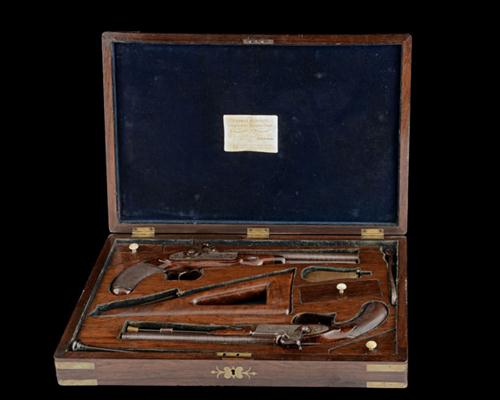
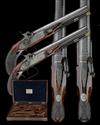
A GOOD CASED CAMPAIGN SET OF .700 CALIBRE PERCUSSION OFFICERS-PISTOLS SIGNED SOUTHALL, no visible serial numbers,
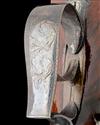
retailed by Thomas Blissett, Liverpool circa 1850, the two pistols with round, slightly tapering browned twist-iron 10in. barrels with engraved steeples terminating in starbursts, silver bead fore-sights, colour-hardened breech-blocks with engraved bands, gold lines and carved fences, fully engraved top-tangs, border engraved lockplates signed 'SOUTHALL' with isolated areas of scroll engraving, scroll engraved slab-sided hammers, figured walnut half-stocks with chequered bag-shaped butts (one with engraved iron mount for a shoulder-brace), white-metal escutcheons engraved with the crest of Sir Roger Palmer Bart., scroll engraved blued square-backed trigger-guard bows, pineapple finials, brass-tipped ebony ramrods, both pistols in fine condition with much original colour; TOGETHER WITH a period rosewood brass-bound storage case lined in blue-black velvet and compartmented in the Continental style with walnut veneer, retailers label to inside of lid and including a walnut skeleton shoulder brace, powder-flask, scissors ball-mould and cleaning rod
Other Notes: The crest engraved on the wrist escutcheons is that of Sir Roger Palmer Bart. of Castle Lockin, Co Mayo. Born 22nd May 1832, Palmer became the Member of Parliament for Co. Mayo in 1857 and held the office until 1865. He was also a Colonel in the 2nd Lifeguards and took part in the infamous charge of the Light Brigade at Balaclava. Palmer survived the charge and the remainder of the Crimean war and by the end had earned himself the Crimean Medal and four clasps.
The Charge of the Light Brigade occurred on the 25th October 1854 and was the result of a miscommunication, the outcome being that the Brigade attempted a much more difficult objective than originally intended by the then Commander, Lord Raglan. Blame for the miscommunication has always remained controversial, as the original order was too vague in the first place. The charge was directed against the wrong battery of Russian guns and produced no decisive gains and caused substantial casualties amongst the Brigade; 118 killed, 127 wounded and around 60 lost as prisoners out of a force of about 670, indeed, by the end only 195 men had managed to retain their horses. It will always be remembered best as the British cavalry carrying out their orders without question, even though "the soldier knew someone had blundered"
Please click HERE to view Terms & Conditions.
Estimate £6,000-8,000