

Product Details
STEYR
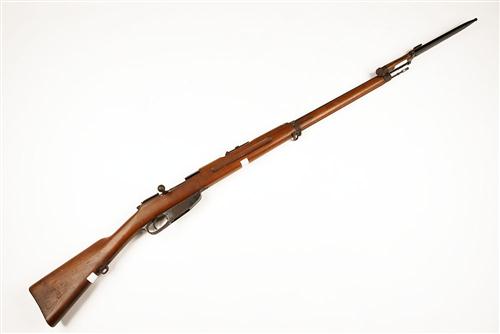
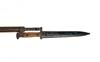
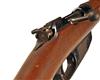
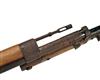
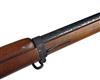
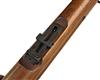
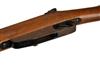
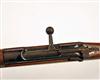
AN INTERESTING 'UVF' 8X57 STEYR 1904 'IRISH MANNLICHER' SERVICE RIFLE, serial no. 7803,
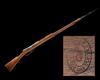
28 1/2in. nitro reproved barrel (in 2013) with tangent rear sight and broad blade fore-sight, cleaning rod, receiver marked 'STEYR 1904', some external rusting overall, the stock stamped with the UVF open palm and 'U.V.F. FOR GOD AND ULSTER' logo, together with a bayonet, crossguard serial numbered 397
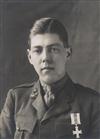
Provenance: The vendor has kindly supplied us with the following information pertaining to a former owner of the rifle:
"Alexander McCreary Dickson lived all his life in County Down, N. Ireland where he was a well respected member of the farming community. He served on local councils and various agricultural and hunting group committees and has a local school named after him. He was a keen horseman and an elder of the local church.
In 1914 he joined the Royal Irish Rifles ( though under military age) and was awarded the M.C. for conspicuous gallantry in action on 1st July 1916 ( at the Battle of the Somme we believe). He led his platoon into the enemy first trench, and on being driven out, led them forward again and was severely wounded in two places, but still carried on. When finally forced back he was the last to leave, and brought a wounded man with him. Though his jaw was broken he refused to be attended to till he had reported to his CO."
The rifle was discovered in Dickson's home twenty years after his death and has passed by descent to the vendor.
Other Notes: This rifle was originally part of a cache of arms involved in the Larne gun-running operation.
The smuggling exercise was master-minded by Major Frederick Crawford and Captain Wilfrid Spender on behalf of the Ulster Unionist Council, to equip the quite recently formed Ulster Volunteer Force (U.V.F.) with nearly 25,000 rifles and between 3-5,000,000 rounds of ammunition. The U.V.F. had been set-up to fight against the imposition of Home Rule and Crawford was tasked with the procurement of arms. He approached several manufacturers including Steyr and DWM, and after several failed attempts, due to Customs intervention, the Larne plan was hatched.
Crawford secured the services of the S.S. Fanny to transport 216 tons of arms and ammunition, and amongst that consignment were 11,000 Mannlicher rifles built by Steyr in Austria. The arms were loaded aboard the ship on 30th March 1914 on the Baltic island of Langeland and she was ready to set-sail when Danish Customs seized the ship's papers. They had thought the arms were destined for Iceland where there was growing dissent by militants who sought independence from Denmark. However, the Fanny managed to leave harbour and steamed into a gale to hide from her pursuers until she was in international waters. Meanwhile, Crawford had bought another ship, the S.S. Clyde Valley, and she steamed out to meet the Fanny off the Irish coast and on the 19th April, the entire cargo was transferred between vessels. The crew then falsified the ship's name and the Clyde Valley became the S.S. Mountjoy II.
It had been arranged that another ship would enter Belfast Lough and arouse Customs suspicions to act as a smokescreen to the real operation that was about to take place at Larne. The 'Mountjoy II' docked in Larne harbour without hindrance and her cargo was transferred into two smaller vessels that took it to Donaghadee. Here the arms were transferred into many hundreds of motor cars, as the Belfast Evening Telegraph later reported, "It was an amazing sight to see this huge procession of cars stretching nearly three miles in length descending upon the town with their headlights ablaze". The guns and ammunition were then taken to safe houses and secret dumps.
This was the very first time that motor vehicles (civil ones in this case) had been used in any great number for a military operation. Quite naturally the operation aroused enormous interest while it was taking place, but the police did not act or stop any of the cars.
The cache of arms was never to see 'active service' as the outbreak of WWI sidelined political considerations in Ireland. Many of the U.V.F. members enlisted with the British Army's 36th (Ulster) Division and the 10th and 16th (Irish) Divisions. These regiments saw bitter action on the Western Front - (the 10th being amalgamated with the 16th following heavy losses at the Battle of Gallipoli), and by the end of the war both divisions were practically eradicated after further heavy losses at the Battle of the Somme and the 1918 German Spring Offensive.
Please click HERE to view Terms & Conditions.
Estimate £700-900
S1