

Product Details
J. PURDEY & SONS
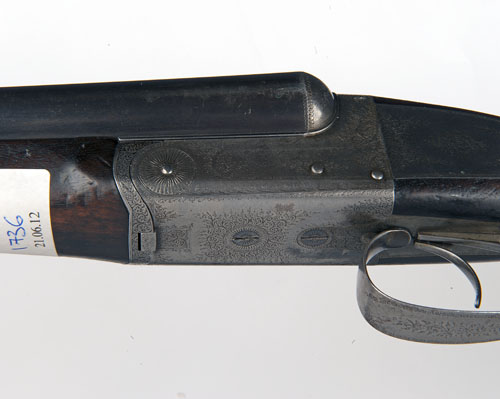
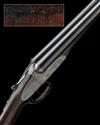
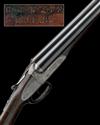
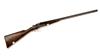
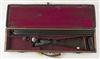
A SCARCE, LIGHTWEIGHT 12-BORE 'TRADE MARK B QUALITY' SIDEPLATED BOXLOCK NON-EJECTOR, serial no. 12565,
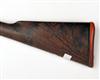
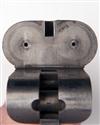
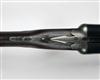
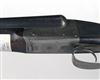
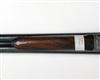
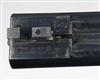
28in. replacement Whitworth-steel nitro chopperlump barrels (by the makers), rib engraved 'J. PURDEY & SONS. AUDLEY HOUSE, SOUTH AUDLEY STREET, LONDON, MADE OF SIR JOSEPH WHITWORTH'S FLUID PRESSED STEEL.', 2 1/2in. chambers, bored approx. 1/2 choke in both, Trade Mark B quality treble-grip action with slender toplever, automatic safety with gold-inlaid 'SAFE' detail, intercepting sears, action and decorative sideplates with best fine bouquet and scroll engraving,retaining slight traces of original colour-hardening, 13 3/4in. highly-figured stock including 3/4in. rubber recoil pad, chequering worn smooth, fore-end with light damage to edges, weight 5lb. 14oz., in its brass-cornered oak-lined leather case, the lid exterior stamped 'G. W. WOLFF. BELFAST.',
Provenance: The makers have kindly informed us that this shotgun was completed in 1886 for G.W. Wolff, and that they subsequently re-barrelled it for him in 1899 using 28in. tubes.
Gustav Wilhelm Wolff was born to a wealthy Hamburg family in November 1834 and his surname was to become synonymous with one of the greatest shipyards to have existed.
The young Wolff developed a keen interest in all things floating, living as he did in one of the world's great seaports. It was decided that he should become an engineer and in the manner of many well-healed German youths at the time, he was sent to England for his formal training. He first attended school in Liverpool before being apprenticed to the firm of Joseph Whitworth & Co. (who later produced their celebrated 'Fluid Compressed Steel'). He so impressed the company that he was sent to represent them at a Paris exhibition when only 21 years old. After a brief spell as a draughtsman, his next move was to Belfast where he took up a post with Robert Hickson & Company at their Queen's Island Shipbuilding Yard.
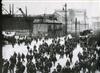
Edward Harland was the firm's general manager and he was offered the opportunity to buy the company out in 1858. This he did and just four years later made Wolff his partner, thus forming the genesis of a great industrial giant. The first three ships that Harland & Wolff built were for Bibby Line where Wolff's uncle, Gustav Schwabe, was a director. The yard established relations with many shipping companies and built most of the great liners operated by the White Star Line, including the ill-fated R.M.S. Titanic.
Wolff's life away from engineering was just as occupied and, aged 58, he put himself forward as Conservative candidate for the vacant seat of East Belfast; a part of the city where many of his staff lived. He won the seat and remained in it through five subsequent general elections where he was unopposed. Belfast granted him the freedom of the city in 1911, three years after he retired from Harland & Wolff. Away from work his two greatest passions were shooting and fishing. Gustav Wolff died on 17th April 1913 and is buried at the Brompton Cemetery in London.
Estimate £3,500-4,500
S2