

Product Details
BY TRADITION, THE FORMER PROPERTY OF JOHN 'PONDERO' TAYLOR
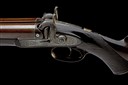
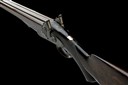
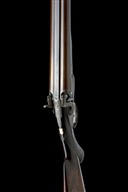
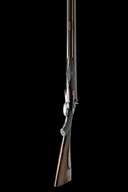
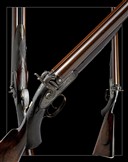
AN 8-BORE PERCUSSION DOUBLE SHOT & BALL GUN SIGNED DEANE & SON, no visible serial number,
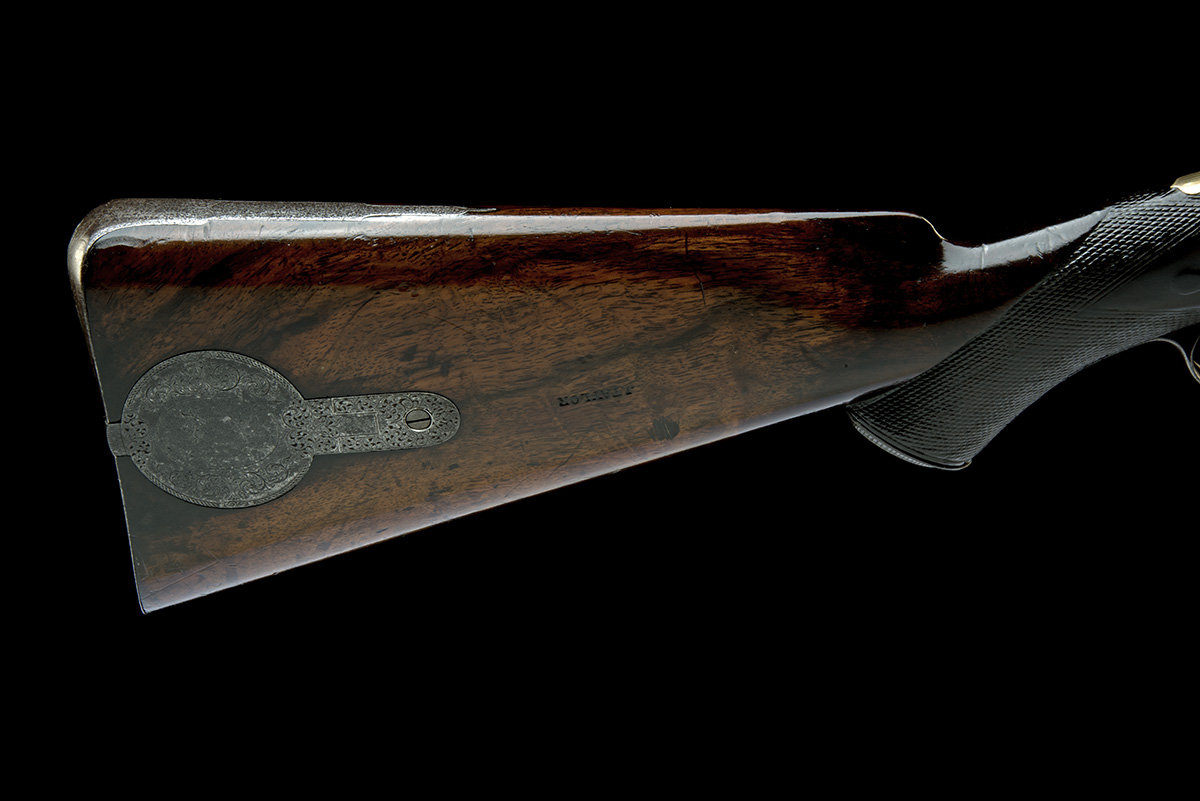
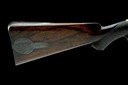
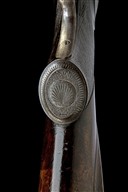
circa 1855, with rebrowned laminate barrels (top-rib lifting), the blade fore-sight replaced with a bead and the inlet for a notch rear-sight filled, engraved bands and shell decoration to breech-blocks, fully engraved top-tang, border and scroll engraved bar-action locks signed 'DEANE & SON' and with bolted safes forwards of the engraved and moulded hammers, chequered walnut pistol-grip half-stock, the raised cheek-piece and the right side of butt stamped 'J. TAYLOR', iron furniture including a patchbox engraved with a vignette of a hunter on horseback engaging a wild boar and an engraved grip-cap with central trap, the ramrod throat well replaced in horn and with it's heavy duty brass mounted ebony ramrod
Provenance: The vendor has conducted extensive research on the gun and has supplied us with the following:
"This shot and ball gun was originally London proved at 10 bore and later Birmingham reproved at 8 bore. There was also evidence of having had a rear-sight in the top-rib. Furthermore, stamped on each side of the stock was the name 'J. Taylor'. The patch box was engraved with a man on a horse shooting at a wild boar.
All these clues seemed to add up and along with the name stamped on the stock, all seemed to indicate that the gun had belonged to John " Pondoro " Taylor; the author of two books on African big game shooting, " Big Game and Big Game Rifles " and " African Rifles and Cartridges ", books regarded as the best ever written on the subject.
John Taylor - the " black sheep " of an aristocratic Irish family, was sent to Africa by his parents in 1920 to escape the Sinn Fein that he had in some way offended, and he arrived there with very little money. He managed to buy a .303 rifle in 1924, having worked on a ranch in Rhodesia and having been a trooper in the British South Africa Police, and with this rifle he went off for an 18 month 'walk about' along the Zambesi and into Angola. He lived by trading the antelope he shot with the natives in exchange for pumpkins, maize meal and eggs. On his return he got a job as a vermin controller on a Rhodesian cattle ranch, and with the main 'vermin' being lions he needed a heavier calibre rifle, so he bought a .500/.450 Martini Henry. It was probably 1927 when he shot his first elephant in Mozambique and he subsequently invested the money he got from this in a double barrel nitro express.
For several years he hunted elephant around the Zambesi as a licensed hunter in Mozambique and as a poacher in Rhodesia. With the funds from the ivory he sold, he went on to purchase several more large calibre rifles.
However, in the late 1920's he made a bad decision (as it turned out) to go to New Guinea to poach 'birds of paradise' for whose feathers there was high demand and high prices being paid and so on leaving he sold all his rifles. On arrival, to his horror, he found that the Japanese had got there before him and were very aggressive in protecting their business, to the extent that his life was threatened. Arriving back at his camp on the Zambesi in 1930 he had virtually nothing to his name and so in order to carry on hunting he had to 'borrow a 10-bore muzzle loading bundook', which he found worked well enough after managed to get some hardened spherical ten to the pound balls, Curtis and Harvey black powder and percussion caps from South Africa.
Shooting by moonlight from a blind at a water hole he claims to have bagged a male elephant and two rhino in his first night out. He is correct when he wrote 'Men with their modern breech-loaders and repeaters are all too often inclined to sneer at the muzzle loader, but a good muzzle loader, properly handled, is a deadly and efficient weapon - provided its limitations are fully realised'.
Later in his life, on more than one occasion he had rifles stolen, which would explain why he was inclined to put his name on them to aid with recovery.
For more information read 'A Man Called Lion' by Peter Hathaway Capstick and published by Safari Press"
Please click HERE to view Terms & Conditions. Please note all Lots are listed in accordance with UK Law, for overseas buyers, please ensure you are familiar with your relevant local firearms and customs regulations before bidding.
Estimate £3,000-4,000