

Product Details
de HAVILLAND AIRCRAFT COMPANY
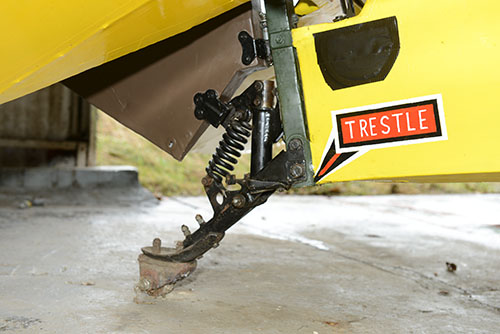
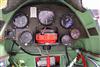
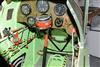
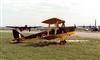
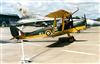
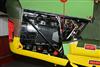
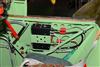
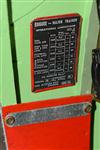
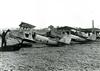
A DH82A 'TIGER MOTH II' ex-R.A.F. AEROPLANE, CIVIL REGISTRATION G-AJTW,
built at Hatfield in 1938 and taken-on-charge by 613 Squadron at Ringway the same year, constructor's serial no.82203, R.A.F. serial no.N6965, in R.A.F. drab camouflage over corn yellow with correct markings, TTAF since rebuild 559.46hrs, TTE 1559.46hrs, new Hoffman propeller in 2010 (zero hrs), last flew June 1999 and was operated on a Private C of A, hangered in Norfolk during the course of its current 29 year ownership.
Lot 999 was featured in a 1995 video documentary release "The Tiger Moth Story", civil registration G-AJTW clearly visible throughout the following extract.
© Vision Crew 1995
Provenance: The vendor purchased this aircraft in June 1985 and has undertaken a great deal of research into her history.
N6965 was completed at de Havilland's main Hatfield factory in 1938 to Air Ministry order 778492/38 and fitted with a de Havilland Gipsy Major Series I engine rated at 130H.P. She entered service with 613 Squadron in July 1939 before spending a short time with 24 M.U. at Ternhill. In March 1940 she was re-allocated to 81 Squadron based at Mont Joie, France, who were serving with the British Expeditionary Force.
The vast majority of Tigers were built for ab-initio training but this aircraft was used for spotting purposes, liaising with ground units in northern France. With several sorties each day, the aircraft would fly towards where it was thought the Germans were located. Basically, once the crew (pilot and observer) had been shot at they'd plot their position and drop the information back to base, repeating this until a picture of how fast the German offensive was advancing could be seen. The advance was rapid and the ensuing evacuation of encircled British, French and Belgian troops from the beaches of Dunkirk is well documented. N6965 reportedly put down in a field near the coast and was given fuel by the farmer before taking-off for England. She was shot at by the enemy and sustained damage but flew on. The crew must have been hugely relieved as they crossed the coast at Dover, only to be fired on by the shore batteries there (in the early stages of the war the ack-ack defences had notoriously itchy trigger-fingers and the lessons in aircraft recognition were soon stepped-up!).
She was transferred twice before joining 418 Squadron R.C.A.F. flying Mosquitos from Bradwell Bay in Essex. The Tiger Moth was used as a general squadron hack and remained on the Dengie Peninsula until being re-allocated, again as a hack, to No.13 O.T.U (Operational Training Unit) at Middleton St. George in December 1945. In March the following year she was involved in a flying accident and sustained Catagory B damage (which meant that the aircraft was repairable by the air force, but not at local unit level). To facilitate the repair she was transferred to No.60 M.U. at York with all work being completed and signed-out by August. After a brief spell back with the O.T.U. she was re-allocated to R.A.F. Derby and the Elementary Flying Training School there. After a further two months back at Middleton St. George the aircraft was placed in storage at R.A.F. Kemble, pending disposal. She remained there until May 1947 before being struck-off-charge and sold to Short Brothers of Rochester (builders of the famous Sunderland anti-submarine flying boat which served with Coastal Command).
Suitable young men were actively encouraged to take-up flying during the 1950s as the Air Ministry were very conscious that we'd had a shortage of trained pilots at the outbreak of hostilities in 1939. The Society of British Aircraft Constructors ran several clubs around the country and received a generous government subsidy to maintain a healthy pool of pilots. The Tiger Moth was put on to the civil register as G-AJTW and flew as a basic trainer from the airfields at Rochester and Newtownards before sustaining major damage in April 1955 during a forced landing near Southend.
We can only be thankful that she survived at all; there was a great surplus of ex-military types available and many perfectly good aircraft of wood/dope construction were simply burnt. Instead however, she was put in storage and remainined there until being bought by the vendor in 1985.
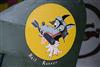
A full three year re-build then ensued and the R.A.F. gave their permission for the aircraft to wear her correct 81 Squadron military markings. All worked was signed-out and Tango Whisky was issued with a new C of A. After sitting on the ground for 33 years she returned to the air on 13th June 1988. The vendor has since put many enjoyable hours on the aircraft and she was well-known in the 1990s on the air show circuit.
Literature: The aircraft is accompanied by all relevant logs, TNS, manuals and reports that track the aircraft during her current ownership. Not extant are logs dating to her time with Shorts.
Other Notes: During her initial restoration, the engine was stripped and formally inspected to ascertain condition (former logs not being available). The C.A.A. signed the engine out at 1,000hrs which is where the vendor's log begins.
She flew until June 1999 when a landing incident resulted in a ground loop and subsequent damage. The aircraft has been repaired but a deal of further attention and remedial work will be necessary before the aircraft can be deemed airworthy on either a C of A or Permit to Fly. All prospective bidders should have their engineer inspect the aircraft and make normal enquiries prior to the sale to satisfy themselves as to the work required. Regardless of the route chosen, a Star inspection will be required before any certificate is issued.
The vendor is happy to show the aircraft to genuinely interested parties. Please contact Holt's in the first instance and we will effect the introduction.
Please click HERE to view Terms & Conditions.
Estimate £40,000-60,000