

Product Details
BOSS & CO.
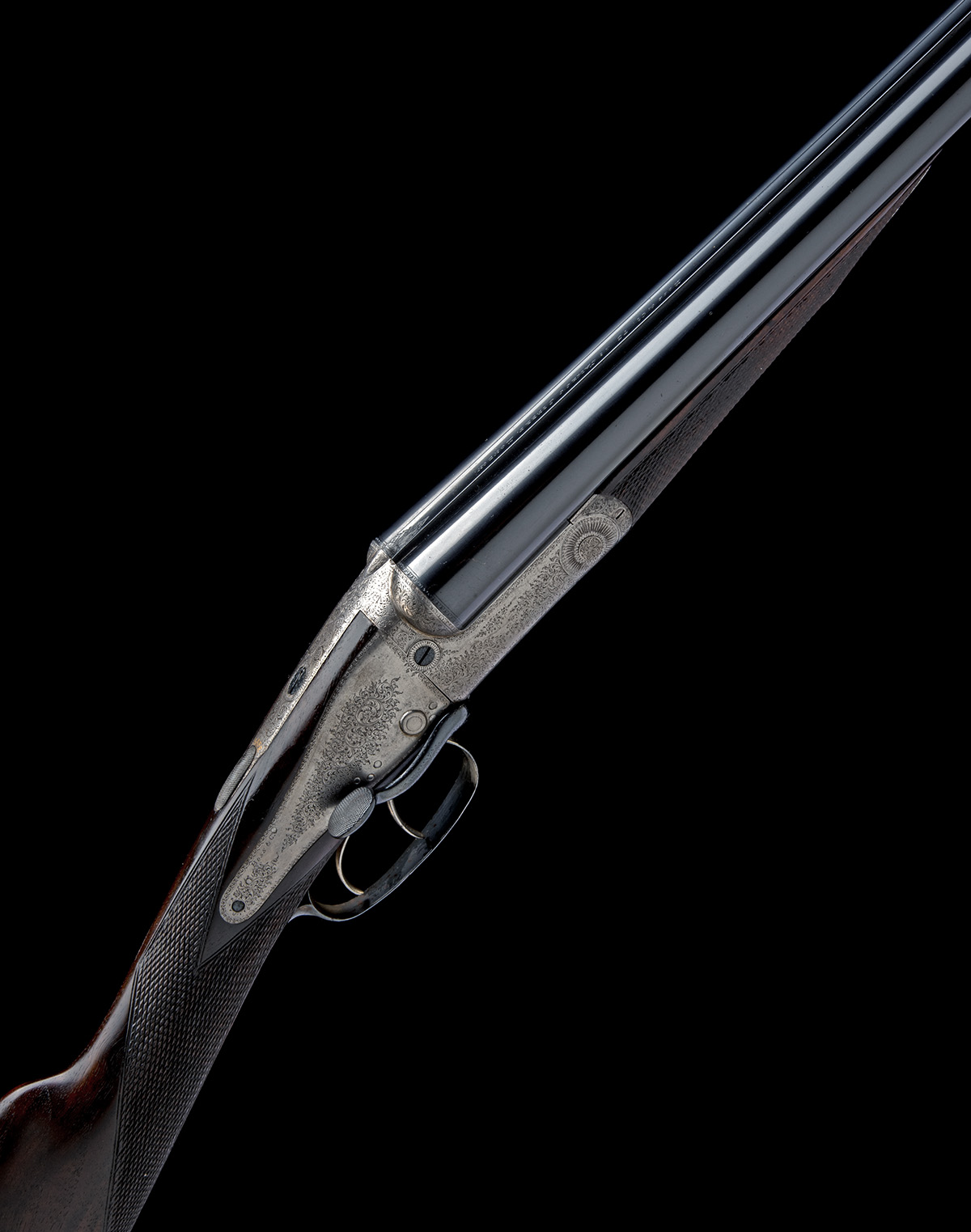
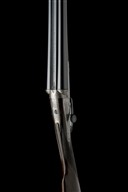
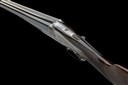
A SCARCE 16-BORE PERKES 1878 PATENT SIDELEVER BACK-ACTION SIDELOCK EJECTOR, serial no. 3950,
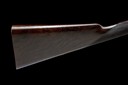
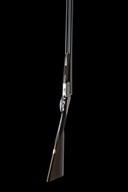
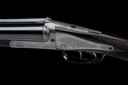
for 1887, 28in. sleeved nitro barrels, the rib engraved 'BOSS & CO. 73 ST. JAMES'S STREET LONDON', (refreshed), 2 1/2in. chambers, bored approx. 1/4 and 1/2 choke, Perkes patent action, No. 1968 of 1878 with Perkes 1886 patent ejectors (at fault), patent No. 10679, Boss license use numbers 361 (action) and 116 (ejectors), automatic safety with gold-inlaid 'SAFE' detail, protruding tumbler pivots, fine border and acanthus scroll engraving, brushed and reblued finish overall, 14 1/2in. figured replacement stock, fore-end with replacement wood and grip-catch lever release, weight 6lb. 3oz., with a leather leg of mutton guncase
Provenance: The makers have kindly confirmed that the gun was ordered by A. Nugent Esq. for Madame Baltazzi nee Ugarte on the 5th December 1887.
The records list the order as:
'a 16-bore Hamm'less gun. "Whitworth" steel 2"5 long, side snap, back action locks, lever forepart. "Ejector", automatic safety on top' and horizontally to the side of the text, in a different hand "Perkes Patent"
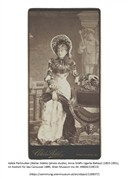
Madame Baltazzi nee Ugarte (born Gräfin Anna Ugarte) was born on the 1st May 1855, daughter to Josef Graf von Ugarte, Austrian envoy to Wurtemberg.
A keen and highly proficient horsewoman, her passion for horses brought her into the sphere of the Baltazzi family, a wealthy Greek banking family, hugely significant in the equestrian world, both as eminently successful jockeys and also for breeding and training champion racehorses in Vienna and at Six Mile Bottom near Newmarket, England.
Anna would marry Hector Baltazzi in 1875, an uncomfortable match socially, with the Baltazzi family barely accepted within the noble ranks, it was only their superlative knowledge of horseflesh and successes on flat races and the steeplechase that brought the barest of acceptance - if grudging. Anna, as an established member of the Austrian Court's inner circle continued to attend court balls and state functions but her husband was never invited - in fact was not only totally ignored, but was never even permitted to cross the threshold of the Hofburg at Vienna.
The marriage would not prove to be a happy one, Hector being prone to dalliances with well known actresses and other artists (particularly Clementine Krauss, and Austrian ballet dancer and opera singer with whom he had an illegitimate son). Anna secured a 'judicial separation', obtaining from Emperor Francis Joseph a special decree 'authorising her to dispense in all legal matters with the name Baltazzi, which she had never used in social intercourse'.
However, the Baltazzi connection would be one to plague her entire life. The tragedy at Mayerling in 1889, resulting in the murder/suicide of the Crown Prince Rudolf (heir to the Austro-Hungarian Empire) and his mistress, Baroness Maria Vetsara, cast an inescapable shadow over Anna's life. Maria was the daughter of Helene Baltazzi (Hector's sister), Anna's niece. It is recorded that Anna always felt that her peers considered her somehow indirectly involved with the tragedy, a feeling she would never lose.
She left Austria and divided her time between Paris and the hunting districts in Leicestershire. Pecuniary difficulties (largely due to extravagances with horseflesh) led to extraordinary solutions - and in 1891, a New York newspaper featured a remarkable article entitled 'A Countess in the Ring' - detailing an astonishing account of how a Countess of ancient lineage and a member of the Austrian court was about to debut as a circus rider of "Haute Ecole" at the Nouveau Cirque at Paris. The article suggested that she had had been coaxed by a celebrated circus proprietor, for an undisclosed sum of money, to 'cast to the winds her scruples', to become the star equestrienne and school rider.
Her obituary, published in a local Rutland newspaper in May 1901 tells the sad tale of her suicide. Following the receipt of a letter, Anna was heard hurrying from her bedroom to the drawing room at Catmos Villa, her house in Oakham. A shot was heard and servants rushed in to find her collapsed and dying, a revolver dropping from her hand and a fatal wound under her left breast, a shot through the heart.
Following proper observances and formalities, the Austrian Embassy arranged for her body to be returned to Vienna and she was buried there in the Central Cemetery.
Please click HERE to view Terms & Conditions. Please note all Lots are listed in accordance with UK Law, for overseas buyers, please ensure you are familiar with your relevant local firearms and customs regulations before bidding.
Estimate £1,500-2,000
S2 - Sold as a Section 2 Firearm under the 1968 Firearms Act